Physical Address
North California Coast
United States
Physical Address
North California Coast
United States

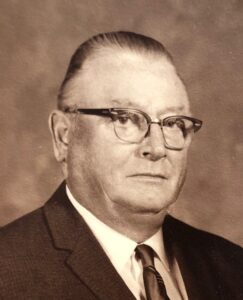
The Grandfather I Grew Up With, Part I
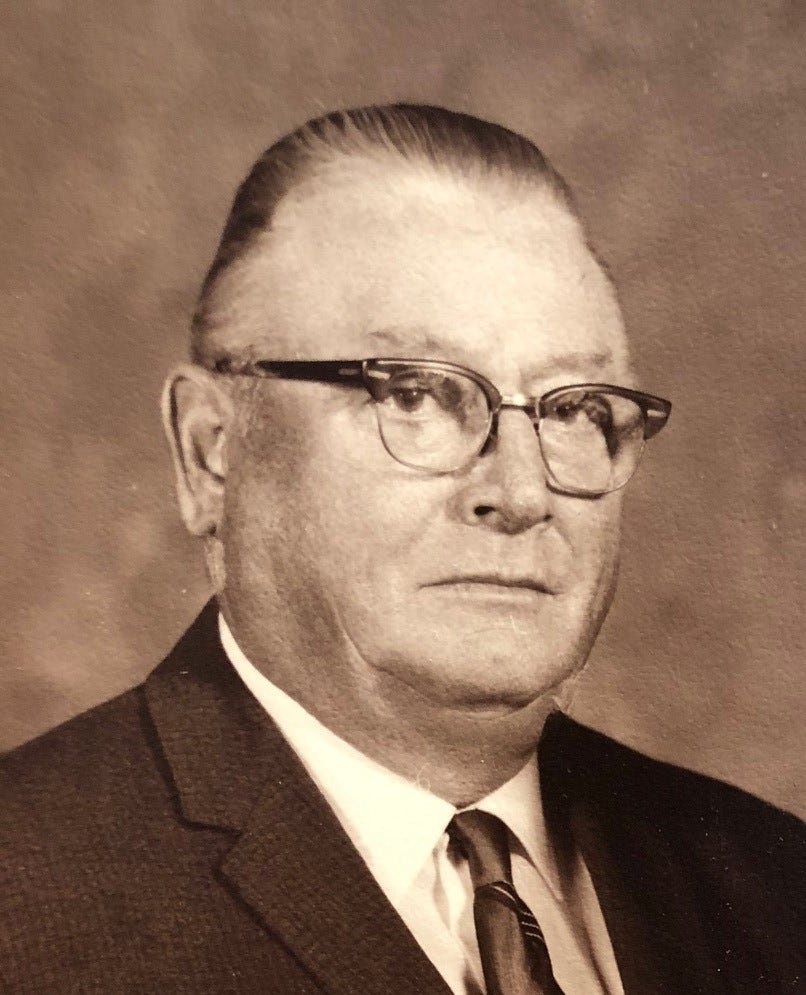
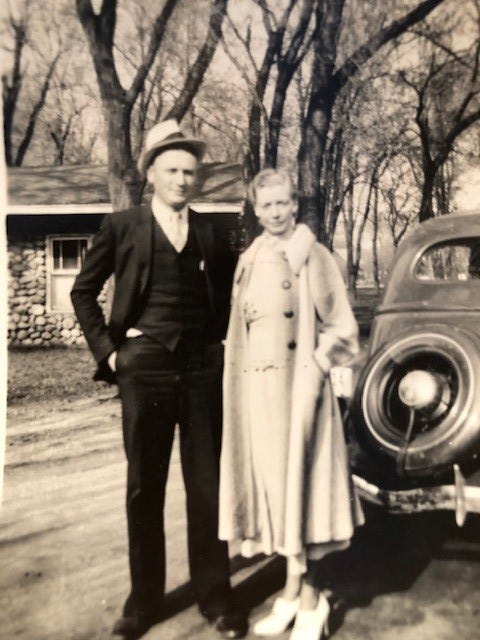
Ernest Albert Fichtner was born on May 25, 1908, in Grant Township, near Hubbard, Hardin County, Iowa, into a family deeply rooted in both German immigration and Midwestern agriculture. His father, Albert Fichtner, emigrated from Germany with his mother and sister Anna on the Weimar, arriving in Baltimore June 3, 1893. They were a part of a broader wave of German settlers who transformed Iowa’s rural landscape.
No record has yet been found of Albert’s father, other than birth records of Albert’s sisters in Germany. He did not sail on the Weimar with them. Albert’s mother Karolena indicated in the ship’s records that her intent was to go to Hubbard, Iowa so there were likely people familiar to her already there. Two sisters (confirmed by family bible records), “Gustie” and Hulda, did not sail with them either. Perhaps they came earlier and that was who Karolena was traveling to join.
Less than a year later, Albert’s sister Anna married a farmer named Albert Rutzen in Hubbard, on March 12, 1894. Albert was also from Germany but had been in Iowa long enough to have an established farm. Sadly, Albert’s mother died in 1897 leaving him alone and on his own at age 16. Undaunted and with the typical industriousness of a midwestern German immigrant, Albert worked hard and by 1900 was a hired hand on a local farm.
On December 30, 1903 Albert married Bertha Wihimena Kath in Hubbard. There are conflicting records as to whether she was born in Germany or the US but regardless, Bertha was the child of German immigrants. After their marriage, Albert and Bertha settled down on a farm in Grant Township which Albert owned. The family grew quickly, adding a son Herman in 1904, a daughter, Minnie in 1906, Ernest in 1908 and finally, Alice in 1909.
The Fichtners’ farm, located along what would become Highway 65, remained their homestead through multiple censuses, underscoring their stability in an era of agricultural expansion. Ernie, as he was known throughout his life, grew up in a close knit family. He and his brother Herman worked on the family farm as soon as they were able, building the skills needed to run their own farms early in life.
Childhood in rural Iowa was hard work, but there was still time for leisure. Ernie became an avid basketball player in school, an asset to the team with his imposing height. He and his brother both honed marksmanship skills, winning local trapshooting competitions. They were known to be pranksters who loved a good joke and grew even closer as they grew to be adults.
On July 8, 1926 Ernie married Oral Alfield Feeden in Hubbard. Alfield was the adopted daughter of Ole and Anna Feeden, an older norweigian couple that had had no children. Alfied’s father died in 1915 when she was 7 years old. Sometime before 1920, her mother remarried and the family lived in Radcliffe where Alfield was raised.
After marriage, Ernie and Alfied settled down on a farm close to that of his brother Herman. Herman had married his wife Hazel just 6 months earlier and the two couples were close. At this point, Ernie’s father owned 3 farms and it is likely that each son was farming one of those. Strong, successful and confident, the brothers started their own families beginning the next generation of Fichtners.
Ernie and Alfield’s first daughter, Audrey Beverly was born on February 12, 1927 at the home of her mother in Eagle Grove, Iowa. While she and Ernie farmed closer to Radcliffe, Alfield went home to prepare for the birth. After recovering from the birth, she and Audrey came back and settled into new family life.
While they certainly felt the hit of the depression, the 2 farms stayed afloat for a while, even if they didn’t prosper. However, according to family history, a land speculator convinced Albert Fichtner to put his 3 farms up as collatoral for a fourth. This may have happened shortly before the depression, and when financial crisis hit, he lost everything. Between the census of 1930 and 1934 Ernie would have to stop farming and like so many others out of work, he would have to scramble to find housing for his young famly.
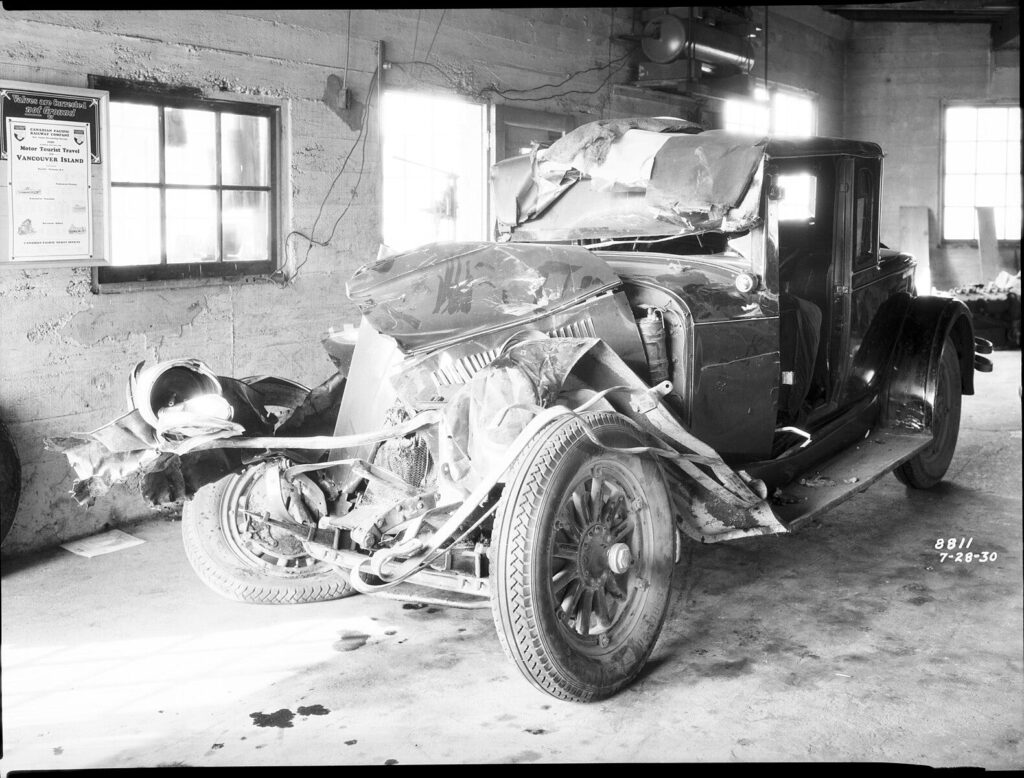
Deeper tragedy struck in 1930 when Ernie’s brother Herman was killed in a auto collision with a freight truck. While the published details say that he was trying to pass on a narrow bridge, the family knew that Herman was driving wrecklessly, possibly even speeding to evade police. Herman was a bootlegger.
Family legends tell that towards the end, the police were searching for him regularly. In order to stay ahead of them, he had arranged a way to know if it was safe to come home. He would stop at his brother Ernie’s farm and fire a shotgun. If it was safe to return, his wife would shoot one in return. If not, he found somewhere else to spend the night. When he died, he was only 25 and he left behind his wife and a 3 year old son as well as his heartbroken family.
Ernie and Alfield had a second child, a daughter, on October 12, 1931. Ardythe Elaine Fichtner was born in Hubbard, likely at their home. Despite their circumstances, the family was happy. They attended church, spent time with their Ernie’s mother and sisters’ families regularly and lived the life of midwestern folks.
In 1934, Ernie’s life changed dramatically. In spite of a congenital heart problem, Alfield had managed to live a relatively normal life. That changed in October when Alfield’s already compromised heart developed an infection . In desperate hope the family took her to the University of Iowa Hospital in Iowa City. The hospital treated her unsuccessfully for 10 days before she finally passed away on October 19th.
There ends Part 1 of my Grandpa’s life. Please continue to read about Ernest Albert Fichtner, in parts 2 and 3.



[…] Ernest Albert Fichtner […]